Backyard Birds in Arizona: How to Attract Desert Birds to a Phoenix or Tucson Yard
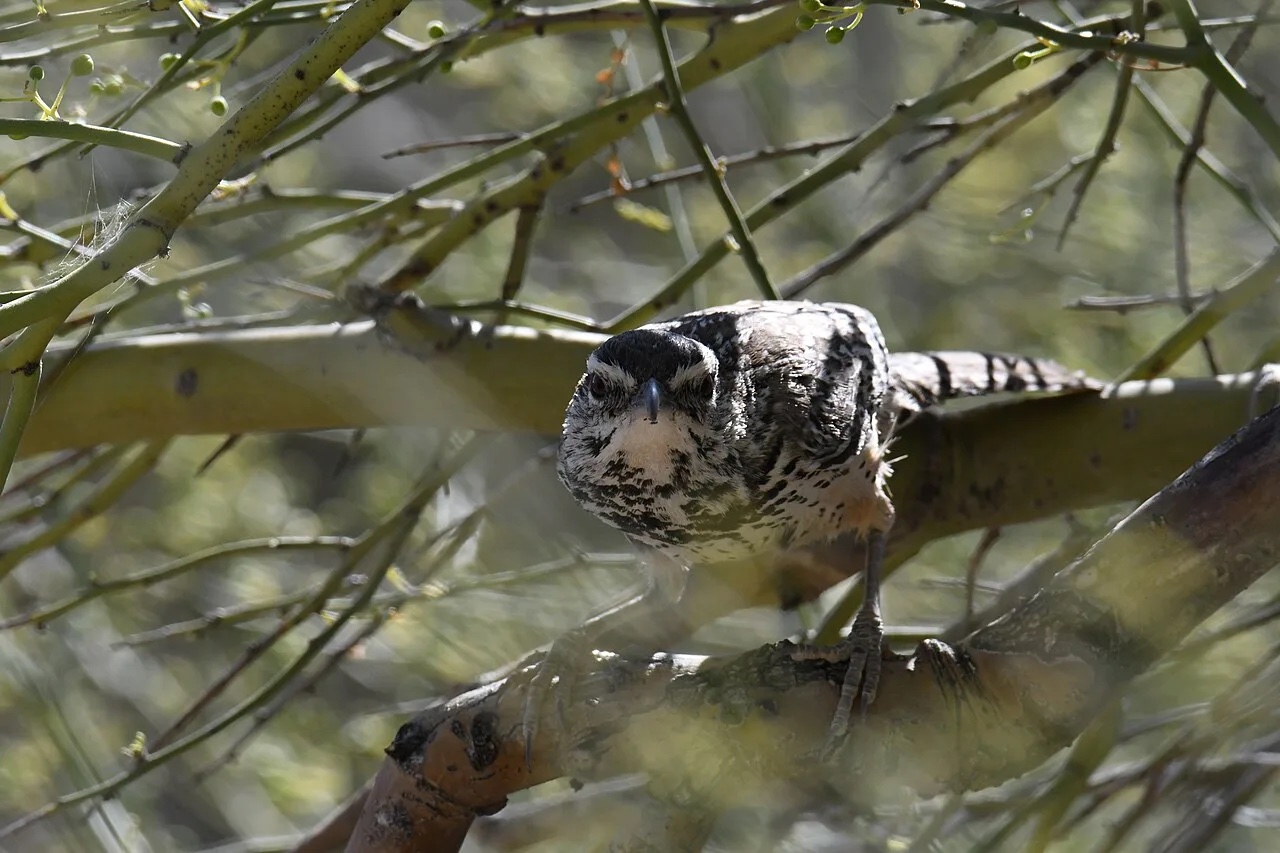
Cactus Wren, Arizona’s state bird. Photo: lwolfartist, CC BY 2.0, via Wikimedia Commons.
Advice about backyard birds usually assumes a green lawn, a cardinal at the feeder and a robin on the grass. Arizona doesn’t work that way. In a Phoenix or Tucson yard the regulars are Gila Woodpeckers, Verdins, Curve-billed Thrashers and Gambel’s Quail, and the thing that brings them in is often water rather than seed.
This guide covers which birds you can realistically expect in an Arizona backyard, how the desert bird year runs, and what to put in your yard (water, plants, feeders) to attract them. The species and seasonal patterns come from the Birds in Arizona guide on AttractBirds, which ranks species by eBird observation records for the state.
Which birds visit Arizona backyards?
Arizona’s most-reported birds on eBird are a desert cast. According to the AttractBirds analysis of 2020–2024 eBird records, the five most frequently reported species in the state are:
- Mourning Dove
- House Finch
- Gila Woodpecker
- Lesser Goldfinch
- Verdin
Anna’s Hummingbird, Curve-billed Thrasher, Abert’s Towhee and Gambel’s Quail also rank inside the top twelve. Birds that dominate eastern backyards rank much lower: the Northern Cardinal comes in around sixteenth and the American Robin around forty-fourth.
That list is a useful reality check. If you design your yard around what these birds need, you’ll see far more activity than if you copy advice written for Ohio.
Water matters more than seed in the desert
If you add only one thing to an Arizona yard, make it water. In a dry landscape a reliable, clean water source draws birds that ignore seed feeders entirely, such as thrashers, Verdins and migrating warblers.
A few practical details:
- Keep it shallow. One to two inches deep, with a rough surface or a few stones so small birds can stand.
- Put it in partial shade. Water in full summer sun gets hot and evaporates fast.
- Refill and scrub often. Warm, standing water grows algae and bacteria quickly. Change it daily in summer and scrub the basin regularly.
- Add movement if you can. A dripper or small bubbler catches birds’ attention and keeps water fresher.
- Place it near cover. A shrub a few feet away gives birds an escape route without letting predators hide right at the edge.
Water also earns its keep year-round. Resident desert birds need it in summer heat, and wintering species use it from fall through spring.
Plant for desert birds, not for a lawn
Native and desert-adapted plants do two jobs: they provide food (nectar, seeds, insects) and they provide cover. Layered planting, with groundcover, shrubs and something taller, gives different birds room to forage at different heights.
What to aim for:
- Nectar plants for hummingbirds. Anna’s Hummingbird is resident year-round in Arizona, and native flowering plants such as penstemons and chuparosa are common choices for hummingbird gardens.
- Dense or thorny shrubs for cover. Quail, towhees and thrashers forage on the ground and dash to cover when startled.
- Seed-bearing plants for finches and sparrows. Let some flowers go to seed instead of deadheading everything.
- Fewer pesticides. Insects feed nestlings, even for birds that eat seed as adults.
The Gila Woodpecker shows how much structure matters in the desert. It carves nest cavities into saguaros, and its old holes later house Elf Owls, kestrels and Purple Martins. You probably can’t plant a mature saguaro, but you can keep the existing desert vegetation that birds already use.
Feeders that suit Arizona birds
Feeders work well in Arizona as long as they match the local birds:
- Nyjer or sunflower chips for Lesser Goldfinches and House Finches.
- Mixed seed scattered on the ground or on a low platform for Gambel’s Quail, doves and towhees, which rarely use hanging feeders.
- Hummingbird feeders filled with a simple mix of one part white sugar to four parts water, with no red dye. In Arizona heat, change the nectar every day or two and clean the feeder each time.
Keep seed dry and discard anything that clumps or smells musty. If birds suddenly stop visiting, a stale feeder or a nearby predator is often the reason. The AttractBirds bird food guide covers which foods suit which species.
When to expect which birds
The desert bird year doesn’t follow the northern pattern. According to the eBird-based calendar on the Arizona birds page, records peak in March, April and May, and are lightest in June and July. Spring, not summer, is the main birding season.
- Year-round residents: Mourning Dove, House Finch, Gila Woodpecker, Verdin, Curve-billed Thrasher, Gambel’s Quail and Anna’s Hummingbird.
- Winter visitors (roughly October to April): White-crowned Sparrows and Yellow-rumped Warblers become some of the most-reported birds in the state, then largely disappear in summer.
- Summer visitors: White-winged Doves arrive around March and are mostly gone by September.
For a backyard, that means the busiest, most varied mix of visitors typically runs from fall through spring, when wintering sparrows and warblers join the residents.
Where to see more Arizona birds
A backyard is a starting point. Southeastern Arizona’s canyons draw birders from across the country, especially for hummingbirds and species that barely reach the United States:
- Madera Canyon: known for the Elegant Trogon and around 15 hummingbird species. May is commonly the peak of spring migration there.
- San Pedro Riparian National Conservation Area: a river corridor important for breeding, migrating and wintering birds.
- Ramsey Canyon Preserve: a Nature Conservancy preserve in the Huachuca Mountains, known for hummingbirds.
- Saguaro National Park: classic Sonoran Desert birds, including woodpeckers nesting in saguaros.
FAQ
What is the most common backyard bird in Arizona?
Based on eBird records analyzed by AttractBirds, the Mourning Dove is the most-reported bird in Arizona, followed by the House Finch, Gila Woodpecker, Lesser Goldfinch and Verdin.
What is Arizona’s state bird?
The Cactus Wren, a large brown wren with a speckled chest and a white stripe over each eye. It is common in the Sonoran Desert and often nests in cholla cactus.
How do I attract hummingbirds in Arizona?
Plant native nectar flowers, add a hummingbird feeder with a 1:4 sugar-to-water mix and no dye, and change the nectar every day or two in hot weather. Anna’s Hummingbirds stay year-round, so a feeder can stay up all year.
Conclusion
Attracting backyard birds in Arizona means designing for the desert: clean, shallow water first, then native plants for food and cover, and feeders matched to quail, finches and hummingbirds rather than eastern species. Expect the most variety from fall through spring. For the full species ranking, a month-by-month calendar and birding hotspots, see the Birds in Arizona guide.