<?xml version="1.0" encoding="utf-8"?><feed xmlns="http://www.w3.org/2005/Atom" ><generator uri="https://jekyllrb.com/" version="3.10.0">Jekyll</generator><link href="https://wxixuan118-ship-it.github.io/feed.xml" rel="self" type="application/atom+xml" /><link href="https://wxixuan118-ship-it.github.io/" rel="alternate" type="text/html" /><updated>2026-10-03T06:51:01+00:00</updated><id>https://wxixuan118-ship-it.github.io/feed.xml</id><title type="html">wxixuan118 blog</title><subtitle>Notes on building small web tools, SEO, and indie projects.</subtitle><entry><title type="html">How a Cursive Text Generator Works: Unicode Script Letters Explained</title><link href="https://wxixuan118-ship-it.github.io/2026/10/03/how-cursive-text-generators-work/" rel="alternate" type="text/html" title="How a Cursive Text Generator Works: Unicode Script Letters Explained" /><published>2026-10-03T06:00:00+00:00</published><updated>2026-10-03T06:00:00+00:00</updated><id>https://wxixuan118-ship-it.github.io/2026/10/03/how-cursive-text-generators-work</id><content type="html" xml:base="https://wxixuan118-ship-it.github.io/2026/10/03/how-cursive-text-generators-work/"><![CDATA[<p><img src="/assets/images/cursive-text-generator-unicode-hero.png" alt="Cursive text generator turning plain text into Unicode script letters" /></p>

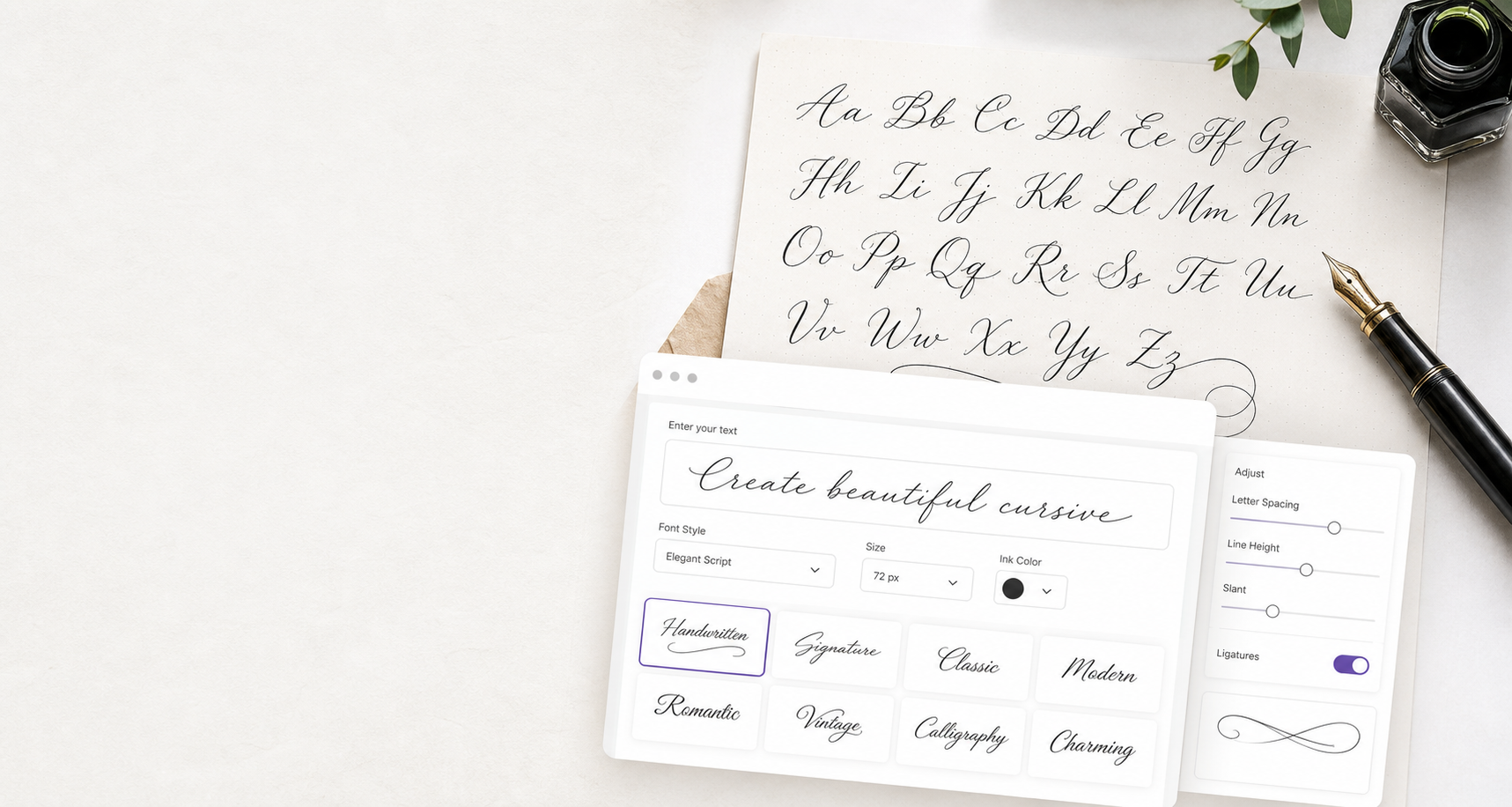
<p>You’ve seen names like 𝓢𝓪𝓻𝓪𝓱 in Instagram bios and Discord profiles, even though neither app lets you pick a font. That text comes from a cursive text generator, and no font is involved at all. Every letter is a separate Unicode character that happens to look like handwriting.</p>

<p>This article explains where those characters live in Unicode, why a naive converter produces broken output, how to write a correct one in a few lines of JavaScript, and the trade-offs (search, accessibility, string length) you should know before using script text in a product.</p>

<h2 id="cursive-text-is-characters-not-a-font">Cursive text is characters, not a font</h2>

<p>A normal font changes how the same characters are drawn. Cursive Unicode text does the opposite: it swaps each letter for a <em>different</em> character whose standard shape is script-like. Because the styling lives in the characters themselves, it survives copy and paste into places that only accept plain text: bios, usernames, chat messages, commit messages.</p>

<p>Most of these characters come from the <strong>Mathematical Alphanumeric Symbols</strong> block (U+1D400–U+1D7FF). Mathematicians need distinct symbols for, say, a script 𝒜 and a bold 𝐀, so Unicode encoded whole alphabets in different styles:</p>

<table>
  <thead>
    <tr>
      <th>Style</th>
      <th>Example</th>
      <th>First code point</th>
    </tr>
  </thead>
  <tbody>
    <tr>
      <td>Script</td>
      <td>𝒜𝒷𝒸</td>
      <td>U+1D49C</td>
    </tr>
    <tr>
      <td>Bold script</td>
      <td>𝓐𝓫𝓬</td>
      <td>U+1D4D0</td>
    </tr>
    <tr>
      <td>Fraktur</td>
      <td>𝔄𝔟𝔠</td>
      <td>U+1D504</td>
    </tr>
    <tr>
      <td>Double-struck</td>
      <td>𝔸𝕓𝕔</td>
      <td>U+1D538</td>
    </tr>
  </tbody>
</table>

<p>A cursive text generator is essentially a lookup table from <code class="language-plaintext highlighter-rouge">A–Z</code> and <code class="language-plaintext highlighter-rouge">a–z</code> into one of these alphabets.</p>

<h2 id="the-gotcha-holes-in-the-script-alphabet">The gotcha: holes in the script alphabet</h2>

<p>If you write the obvious converter, “offset every letter from U+1D49C”, you get gaps. Eleven positions in the Mathematical Script range are <em>reserved and empty</em>:</p>

<div class="language-text highlighter-rouge"><div class="highlight"><pre class="highlight"><code>B E F H I L M R   (capitals)
e g o             (lowercase)
</code></pre></div></div>

<p>Those letters already existed in Unicode before the math block was added, in the older <strong>Letterlike Symbols</strong> block, so Unicode didn’t encode them twice. The correct characters are:</p>

<table>
  <thead>
    <tr>
      <th>Letter</th>
      <th>Character</th>
      <th>Code point</th>
    </tr>
  </thead>
  <tbody>
    <tr>
      <td>B</td>
      <td>ℬ</td>
      <td>U+212C</td>
    </tr>
    <tr>
      <td>E</td>
      <td>ℰ</td>
      <td>U+2130</td>
    </tr>
    <tr>
      <td>F</td>
      <td>ℱ</td>
      <td>U+2131</td>
    </tr>
    <tr>
      <td>H</td>
      <td>ℋ</td>
      <td>U+210B</td>
    </tr>
    <tr>
      <td>I</td>
      <td>ℐ</td>
      <td>U+2110</td>
    </tr>
    <tr>
      <td>L</td>
      <td>ℒ</td>
      <td>U+2112</td>
    </tr>
    <tr>
      <td>M</td>
      <td>ℳ</td>
      <td>U+2133</td>
    </tr>
    <tr>
      <td>R</td>
      <td>ℛ</td>
      <td>U+211B</td>
    </tr>
    <tr>
      <td>e</td>
      <td>ℯ</td>
      <td>U+212F</td>
    </tr>
    <tr>
      <td>g</td>
      <td>ℊ</td>
      <td>U+210A</td>
    </tr>
    <tr>
      <td>o</td>
      <td>ℴ</td>
      <td>U+2134</td>
    </tr>
  </tbody>
</table>

<p>The bold script alphabet (U+1D4D0 onward) has no such holes, which is one reason many generators default to bold script. Fraktur and double-struck have their own gaps too (Fraktur is missing C, H, I, R and Z; double-struck is missing C, H, N, P, Q, R and Z), so check every alphabet you add.</p>

<h2 id="a-minimal-cursive-converter-in-javascript">A minimal cursive converter in JavaScript</h2>

<p>Here is a small converter that handles the holes correctly. It maps letters and leaves digits, spaces and punctuation alone:</p>

<div class="language-javascript highlighter-rouge"><div class="highlight"><pre class="highlight"><code><span class="kd">const</span> <span class="nx">SCRIPT_START</span> <span class="o">=</span> <span class="mh">0x1d49c</span><span class="p">;</span> <span class="c1">// MATHEMATICAL SCRIPT CAPITAL A</span>
<span class="kd">const</span> <span class="nx">HOLES</span> <span class="o">=</span> <span class="p">{</span>
  <span class="na">B</span><span class="p">:</span> <span class="dl">"</span><span class="s2">ℬ</span><span class="dl">"</span><span class="p">,</span> <span class="na">E</span><span class="p">:</span> <span class="dl">"</span><span class="s2">ℰ</span><span class="dl">"</span><span class="p">,</span> <span class="na">F</span><span class="p">:</span> <span class="dl">"</span><span class="s2">ℱ</span><span class="dl">"</span><span class="p">,</span> <span class="na">H</span><span class="p">:</span> <span class="dl">"</span><span class="s2">ℋ</span><span class="dl">"</span><span class="p">,</span> <span class="na">I</span><span class="p">:</span> <span class="dl">"</span><span class="s2">ℐ</span><span class="dl">"</span><span class="p">,</span> <span class="na">L</span><span class="p">:</span> <span class="dl">"</span><span class="s2">ℒ</span><span class="dl">"</span><span class="p">,</span> <span class="na">M</span><span class="p">:</span> <span class="dl">"</span><span class="s2">ℳ</span><span class="dl">"</span><span class="p">,</span> <span class="na">R</span><span class="p">:</span> <span class="dl">"</span><span class="s2">ℛ</span><span class="dl">"</span><span class="p">,</span>
  <span class="na">e</span><span class="p">:</span> <span class="dl">"</span><span class="s2">ℯ</span><span class="dl">"</span><span class="p">,</span> <span class="na">g</span><span class="p">:</span> <span class="dl">"</span><span class="s2">ℊ</span><span class="dl">"</span><span class="p">,</span> <span class="na">o</span><span class="p">:</span> <span class="dl">"</span><span class="s2">ℴ</span><span class="dl">"</span><span class="p">,</span>
<span class="p">};</span>

<span class="kd">function</span> <span class="nx">toScript</span><span class="p">(</span><span class="nx">text</span><span class="p">)</span> <span class="p">{</span>
  <span class="k">return</span> <span class="p">[...</span><span class="nx">text</span><span class="p">].</span><span class="nx">map</span><span class="p">((</span><span class="nx">ch</span><span class="p">)</span> <span class="o">=&gt;</span> <span class="p">{</span>
    <span class="k">if</span> <span class="p">(</span><span class="nx">HOLES</span><span class="p">[</span><span class="nx">ch</span><span class="p">])</span> <span class="k">return</span> <span class="nx">HOLES</span><span class="p">[</span><span class="nx">ch</span><span class="p">];</span>
    <span class="k">if</span> <span class="p">(</span><span class="nx">ch</span> <span class="o">&gt;=</span> <span class="dl">"</span><span class="s2">A</span><span class="dl">"</span> <span class="o">&amp;&amp;</span> <span class="nx">ch</span> <span class="o">&lt;=</span> <span class="dl">"</span><span class="s2">Z</span><span class="dl">"</span><span class="p">)</span> <span class="k">return</span> <span class="nb">String</span><span class="p">.</span><span class="nx">fromCodePoint</span><span class="p">(</span><span class="nx">SCRIPT_START</span> <span class="o">+</span> <span class="nx">ch</span><span class="p">.</span><span class="nx">charCodeAt</span><span class="p">(</span><span class="mi">0</span><span class="p">)</span> <span class="o">-</span> <span class="mi">65</span><span class="p">);</span>
    <span class="k">if</span> <span class="p">(</span><span class="nx">ch</span> <span class="o">&gt;=</span> <span class="dl">"</span><span class="s2">a</span><span class="dl">"</span> <span class="o">&amp;&amp;</span> <span class="nx">ch</span> <span class="o">&lt;=</span> <span class="dl">"</span><span class="s2">z</span><span class="dl">"</span><span class="p">)</span> <span class="k">return</span> <span class="nb">String</span><span class="p">.</span><span class="nx">fromCodePoint</span><span class="p">(</span><span class="nx">SCRIPT_START</span> <span class="o">+</span> <span class="mi">26</span> <span class="o">+</span> <span class="nx">ch</span><span class="p">.</span><span class="nx">charCodeAt</span><span class="p">(</span><span class="mi">0</span><span class="p">)</span> <span class="o">-</span> <span class="mi">97</span><span class="p">);</span>
    <span class="k">return</span> <span class="nx">ch</span><span class="p">;</span>
  <span class="p">}).</span><span class="nx">join</span><span class="p">(</span><span class="dl">""</span><span class="p">);</span>
<span class="p">}</span>

<span class="nx">console</span><span class="p">.</span><span class="nx">log</span><span class="p">(</span><span class="nx">toScript</span><span class="p">(</span><span class="dl">"</span><span class="s2">Hello World</span><span class="dl">"</span><span class="p">));</span> <span class="c1">// ℋℯ𝓁𝓁ℴ 𝒲ℴ𝓇𝓁𝒹</span>
</code></pre></div></div>

<p>Two details matter. <code class="language-plaintext highlighter-rouge">String.fromCodePoint</code> is needed because these characters sit above U+FFFF, outside the Basic Multilingual Plane. And spreading the string with <code class="language-plaintext highlighter-rouge">[...text]</code> iterates by code point, so the function also works if the input already contains astral characters.</p>

<p>If you’d rather not maintain tables for every style, a tool such as <a href="https://www.cursive-text-generator.net/">Cursive Text Generator</a> previews dozens of script, bold and calligraphy styles side by side so you can compare them before deciding which alphabet to support.</p>

<h2 id="string-length-normalization-and-search">String length, normalization and search</h2>

<p>Script characters behave differently from ASCII in code, and that leaks into product behavior.</p>

<p><strong>Length.</strong> Characters above U+FFFF take two UTF-16 code units. In JavaScript, <code class="language-plaintext highlighter-rouge">"𝓒𝓾𝓻𝓼𝓲𝓿𝓮".length</code> is <code class="language-plaintext highlighter-rouge">14</code>, while <code class="language-plaintext highlighter-rouge">[..."𝓒𝓾𝓻𝓼𝓲𝓿𝓮"].length</code> is <code class="language-plaintext highlighter-rouge">7</code>. If you enforce a username limit with <code class="language-plaintext highlighter-rouge">.length</code>, cursive names will hit it at half the expected size. Many platforms count by code point instead, but test the specific field.</p>

<p><strong>Normalization.</strong> Unicode compatibility normalization folds these characters back to plain letters:</p>

<div class="language-javascript highlighter-rouge"><div class="highlight"><pre class="highlight"><code><span class="dl">"</span><span class="s2">𝓒𝓾𝓻𝓼𝓲𝓿𝓮</span><span class="dl">"</span><span class="p">.</span><span class="nx">normalize</span><span class="p">(</span><span class="dl">"</span><span class="s2">NFKC</span><span class="dl">"</span><span class="p">);</span> <span class="c1">// "Cursive"</span>
</code></pre></div></div>

<p>That is useful on the receiving side. If your app lets users pick styled display names, normalizing with NFKC before indexing or checking for duplicates prevents “Sarah” and “𝓢𝓪𝓻𝓪𝓱” from being treated as unrelated strings.</p>

<p><strong>Search.</strong> Without that normalization step, search engines and in-app search usually treat script characters as distinct symbols. Someone searching for “Sarah” may never find “𝓢𝓪𝓻𝓪𝓱”. Keep handles and anything that must be discoverable in plain text.</p>

<h2 id="where-cursive-unicode-text-renders-and-where-it-breaks">Where cursive Unicode text renders, and where it breaks</h2>

<p>Rendering depends on whether the device has a font covering the Mathematical Alphanumeric Symbols block. Modern iOS, macOS and recent Android versions generally do. Older systems may show empty boxes (“tofu”) instead.</p>

<p>Platforms also restrict fields differently. A bio or display name may accept script characters while the @username field strips them or only allows ASCII. The site behind the generator above maintains a <a href="https://www.cursive-text-generator.net/cursive-compatibility.html">cursive Unicode compatibility test</a> that maps which fields on Instagram, TikTok, Discord and WhatsApp keep the styling, and which devices show boxes. That kind of field-by-field check saves a lot of trial and error.</p>

<h2 id="accessibility-use-script-text-sparingly">Accessibility: use script text sparingly</h2>

<p>Screen readers don’t always read these characters as letters. Depending on the reader and platform, a styled name may be announced character by character with long symbol names, or skipped. For decorative use in a short display name that is usually tolerable. For whole sentences, instructions or anything a user must understand, it isn’t.</p>

<p>A sensible rule: keep script text to a few words, never use it for essential information, and keep a plain-text version wherever meaning matters.</p>

<h2 id="faq">FAQ</h2>

<h3 id="is-cursive-text-from-a-generator-a-real-font">Is cursive text from a generator a real font?</h3>

<p>No. It is a sequence of Unicode characters that look like script letters. That is why it can be pasted into apps that don’t let you change fonts, and also why its appearance depends on the system fonts on the reader’s device.</p>

<h3 id="why-do-some-cursive-letters-look-different-from-the-rest">Why do some cursive letters look different from the rest?</h3>

<p>Eleven script letters (B, E, F, H, I, L, M, R, e, g, o) come from the Letterlike Symbols block rather than the math block. Fonts often draw that block slightly differently, so those letters can look a little out of place next to the others.</p>

<h3 id="why-does-my-cursive-text-show-up-as-boxes">Why does my cursive text show up as boxes?</h3>

<p>The device or app doesn’t have a font covering those characters. Updating the OS usually fixes it. For text that must display everywhere, use plain letters.</p>

<h2 id="conclusion">Conclusion</h2>

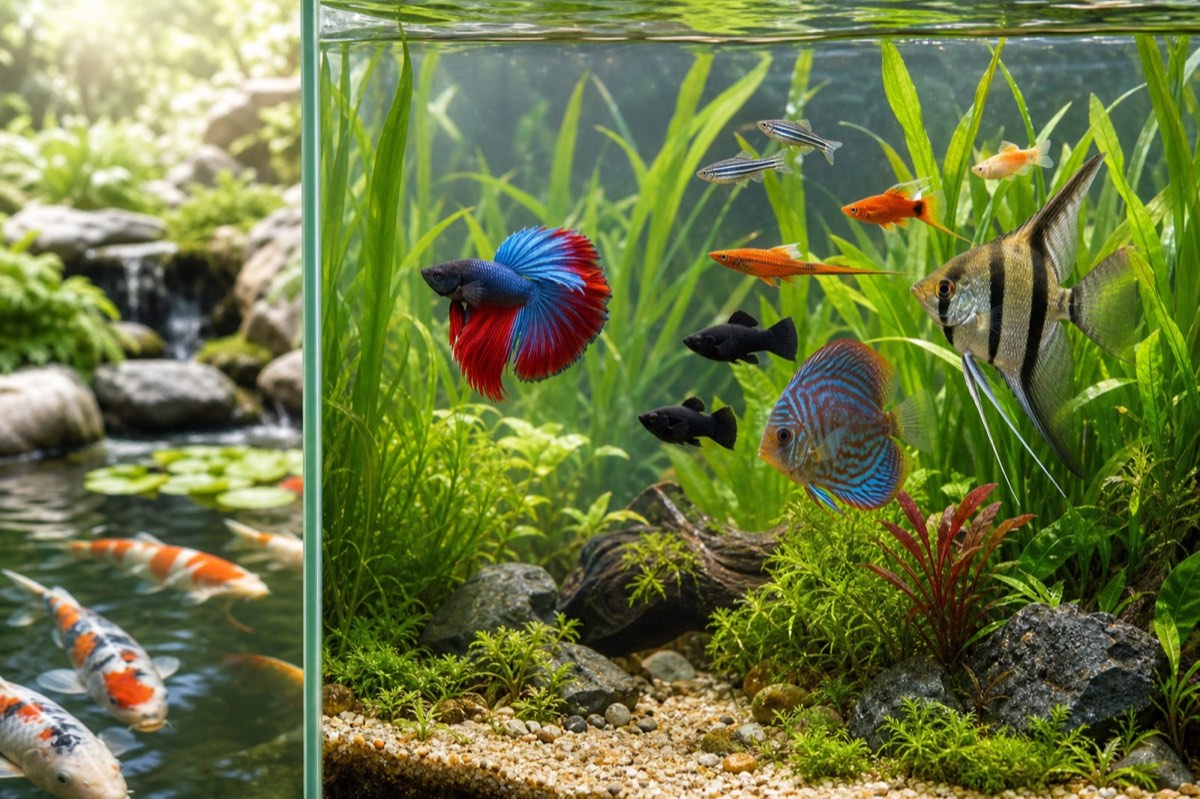
<p>A cursive text generator is a lookup table into Unicode’s math alphabets, plus a patch for the eleven letters that live elsewhere. Once you know that, the side effects make sense: doubled string lengths in JavaScript, invisible-to-search names, screen-reader noise and the occasional box. Use script text for short decorative touches, normalize it on the way in, and when you want to compare styles quickly, try the <a href="https://www.cursive-text-generator.net/">free cursive text generator</a>.</p>]]></content><author><name></name></author><category term="unicode" /><category term="javascript" /><category term="typography" /><summary type="html"><![CDATA[How cursive text generators work: Unicode script alphabets, the 11 missing letters, a JavaScript converter, and pitfalls with length and search.]]></summary><media:thumbnail xmlns:media="http://search.yahoo.com/mrss/" url="https://wxixuan118-ship-it.github.io/assets/images/cursive-text-generator-unicode-hero.png" /><media:content medium="image" url="https://wxixuan118-ship-it.github.io/assets/images/cursive-text-generator-unicode-hero.png" xmlns:media="http://search.yahoo.com/mrss/" /></entry><entry><title type="html">Molly Fish Care for Beginners: A Practical Checklist for Your First Month</title><link href="https://wxixuan118-ship-it.github.io/2026/10/03/molly-fish-care-beginner-checklist/" rel="alternate" type="text/html" title="Molly Fish Care for Beginners: A Practical Checklist for Your First Month" /><published>2026-10-03T03:00:00+00:00</published><updated>2026-10-03T03:00:00+00:00</updated><id>https://wxixuan118-ship-it.github.io/2026/10/03/molly-fish-care-beginner-checklist</id><content type="html" xml:base="https://wxixuan118-ship-it.github.io/2026/10/03/molly-fish-care-beginner-checklist/"><![CDATA[<p><img src="/assets/images/molly-fish-care-community-aquarium.jpg" alt="Planted community aquarium with black mollies, angelfish and other peaceful tropical fish" /></p>

<p>Molly fish care looks easy on the store label. Mollies are colorful, active and usually tagged “beginner friendly.” Yet many new keepers lose them in the first few weeks, and the reason is rarely a mystery disease. It is usually the water: a tank that isn’t cycled yet, or soft, acidic tap water that suits other community fish but not mollies.</p>

<p>This checklist walks through what to sort out before you buy, how to set up the tank, what to feed, and what to expect when your mollies start breeding (they will). For deeper reference tables, the <a href="https://www.fishcareai.com/guides/molly-fish-care/">FishCare AI molly fish care guide</a> covers nine varieties, a breeding timeline and health problems in detail.</p>

<h2 id="before-you-buy-check-your-water-not-just-the-fish">Before you buy: check your water, not just the fish</h2>

<p>The most useful molly care step happens before you visit the shop. Mollies (genus <em>Poecilia</em>) do best in warm, moderately hard, slightly alkaline water, and that is something you either have from the tap or have to build.</p>

<p>Test three things in your tap water:</p>

<ul>
  <li><strong>pH</strong>: a practical target for mollies is roughly 7.5–8.2.</li>
  <li><strong>GH (general hardness)</strong>: tells you whether there are enough calcium and magnesium minerals.</li>
  <li><strong>KH (carbonate hardness)</strong>: shows how well the water resists pH swings.</li>
</ul>

<p>If your tap water is naturally soft and acidic, think twice. Constantly dosing buffers to chase a number is riskier than choosing a fish that likes your water. Stable water you can keep stable beats perfect water you can only hit occasionally.</p>

<p>The other pre-purchase task is cycling. A new tank needs time for beneficial bacteria to establish so that ammonia and nitrite stay at 0 ppm. Adding mollies to an uncycled tank is one of the most common reasons they die early.</p>

<h2 id="molly-tank-size-and-setup">Molly tank size and setup</h2>

<p>A 20-gallon aquarium is a practical minimum for a small group of common short-fin mollies. Go for 30 gallons or more if you want sailfin mollies, a mixed-sex group, or any chance of keeping fry. Adult mollies usually reach about 3–5 inches, and sailfins can grow larger, so plan for the adult fish rather than the juvenile in the bag.</p>

<p>Shape matters as much as volume. Mollies swim horizontally, so a long or standard tank works better than a tall, narrow one. If you are comparing tanks, a <a href="https://www.fishcareai.com/tools/aquarium-size-calculator/">tank size calculator</a> helps turn dimensions into usable volume.</p>

<p>A basic molly setup includes:</p>

<ol>
  <li><strong>A mature filter</strong> with enough biological media and some surface movement.</li>
  <li><strong>An adjustable heater and a separate thermometer</strong>, kept around 72–82°F (22–28°C). Stability matters more than the exact number.</li>
  <li><strong>Plants along the sides and back</strong>, with an open swimming lane in the middle. Floating plants give females and fry somewhere to hide.</li>
  <li><strong>A lid</strong>, plus decor without sharp edges that could tear long fins.</li>
</ol>

<h2 id="do-mollies-need-salt">Do mollies need salt?</h2>

<p>Not routinely. Some wild mollies live in coastal or brackish water, which is where the “mollies need salt” advice comes from. Most store-bought mollies live well in properly mineralized freshwater.</p>

<p>Salt is not a fix for soft water. It raises salinity, but it doesn’t add the calcium and magnesium that GH measures. Adding salt casually can also harm plants, snails, shrimp and soft-water fish in the same tank. If you want a brackish molly tank, plan it deliberately and measure salinity.</p>

<h2 id="group-size-tank-mates-and-the-male-to-female-ratio">Group size, tank mates and the male-to-female ratio</h2>

<p>Mollies are social and do better in a group, often five or more when the tank is big enough. The catch is that males pursue females almost constantly. Keep at least two, and ideally three, females for every male to spread that attention out.</p>

<p>Good molly tank mates share warm, harder water and a peaceful temperament:</p>

<ul>
  <li>Platies, swordtails and guppies (fellow livebearers)</li>
  <li>Bristlenose plecos</li>
  <li>Many peaceful rainbowfish, danios and gouramis, if the water suits them</li>
</ul>

<p>Avoid fin-nippers such as tiger barbs, aggressive cichlids, goldfish (cooler water) and small shrimp, which mollies may eat. Before adding a new species, a <a href="https://www.fishcareai.com/tools/fish-compatibility-checker/">fish compatibility checker</a> is a quick way to compare water ranges, size and temperament.</p>

<h2 id="what-to-feed-mollies">What to feed mollies</h2>

<p>Mollies are omnivores with a strong taste for plants. In the wild they graze on algae and biofilm as well as eating small invertebrates.</p>

<p>A simple molly diet:</p>

<ul>
  <li><strong>Staple</strong>: a quality flake or small pellet that lists spirulina or algae.</li>
  <li><strong>Plant extras</strong>: spirulina wafers, blanched zucchini or spinach.</li>
  <li><strong>Protein variety</strong>: frozen daphnia, baby brine shrimp or bloodworms two or three times a week.</li>
</ul>

<p>Feed one to three small meals a day, only as much as the fish finish in a minute or two. Leftover food breaks down into ammonia, which hits a new tank hardest. Long strings of waste or cloudy water usually mean you are feeding too much.</p>

<h2 id="molly-breeding-plan-for-fry-before-you-mix-sexes">Molly breeding: plan for fry before you mix sexes</h2>

<p>If you keep males and females together, you will get babies. Mollies are livebearers. Pregnancy usually lasts about 30–60 days, and a single brood can range from around 10 to more than 100 fry. Females can store sperm, so a female bought without a male may still give birth weeks later.</p>

<p>Signs of pregnancy include a rounder belly and, on lighter fish, a darkening spot near the anal fin. Late in pregnancy, the belly can look almost square. Don’t mistake raised, pinecone-like scales for pregnancy; that is a health warning, not a birth sign.</p>

<p>Adults don’t care for their fry and will eat them. Dense floating plants such as hornwort or water sprite give newborns cover. To raise more of them, move the female to a separate cycled tank before birth, feed the fry crushed flake or fry food three or four times a day, and decide early where the juveniles will go. Mollies breed quickly, and a tank can become overstocked within a few months.</p>

<h2 id="warning-signs-to-act-on-early">Warning signs to act on early</h2>

<p>Molly problems usually show up in behavior first. Watch for:</p>

<ul>
  <li>Shimmying: rocking in place with little forward movement</li>
  <li>Clamped fins, gasping at the surface or rapid breathing</li>
  <li>White spots, a dusty coating, frayed fins or swelling</li>
  <li>Hiding or refusing food</li>
</ul>

<p>Shimmying is a symptom, not a disease, and it is often linked to water: low minerals, temperature swings, or ammonia and nitrite. Test the water before reaching for medication. If symptoms persist, a <a href="https://www.fishcareai.com/fish-health/fish/molly">molly health problems guide</a> can help you narrow down likely causes, and an aquatic vet is the right call for serious or unexplained illness.</p>

<h2 id="faq">FAQ</h2>

<h3 id="are-molly-fish-good-for-beginners">Are molly fish good for beginners?</h3>

<p>They can be, if the beginner is ready for their needs: a cycled tank of at least 20 gallons, stable warm water with adequate hardness, and a plan for fry. They are less forgiving in soft, acidic water or new tanks.</p>

<h3 id="how-long-do-molly-fish-live">How long do molly fish live?</h3>

<p>Usually about three to five years. Water quality, stress, genetics and the fish’s condition when you bought it all affect how long an individual molly lives.</p>

<h3 id="how-many-mollies-should-i-keep-together">How many mollies should I keep together?</h3>

<p>Aim for a small group, often five or more if the tank allows, with two or three females per male. Don’t squeeze a big group into a small tank just to reach a number.</p>

<h2 id="conclusion">Conclusion</h2>

<p>Good molly fish care comes down to a few habits: match the fish to your water, cycle the tank first, give them room to swim, keep the male-to-female ratio sensible and plan for fry before they arrive. Get those right and mollies are lively, long-lived community fish. When you need the full reference, including variety comparisons and a breeding timeline, see the <a href="https://www.fishcareai.com/guides/molly-fish-care/">complete molly fish care guide on FishCare AI</a>.</p>]]></content><author><name></name></author><category term="aquarium" /><category term="fishkeeping" /><category term="molly-fish" /><summary type="html"><![CDATA[Molly fish care for beginners: water tests, 20-gallon setup, tank mates, diet and how to plan for fry before your mollies start breeding.]]></summary><media:thumbnail xmlns:media="http://search.yahoo.com/mrss/" url="https://wxixuan118-ship-it.github.io/assets/images/molly-fish-care-community-aquarium.jpg" /><media:content medium="image" url="https://wxixuan118-ship-it.github.io/assets/images/molly-fish-care-community-aquarium.jpg" xmlns:media="http://search.yahoo.com/mrss/" /></entry><entry><title type="html">How to Write a 1980s Photo Prompt That Looks Like a Real 1985 Snapshot</title><link href="https://wxixuan118-ship-it.github.io/2026/10/03/1980s-photo-prompt-guide/" rel="alternate" type="text/html" title="How to Write a 1980s Photo Prompt That Looks Like a Real 1985 Snapshot" /><published>2026-10-03T02:00:00+00:00</published><updated>2026-10-03T02:00:00+00:00</updated><id>https://wxixuan118-ship-it.github.io/2026/10/03/1980s-photo-prompt-guide</id><content type="html" xml:base="https://wxixuan118-ship-it.github.io/2026/10/03/1980s-photo-prompt-guide/"><![CDATA[<p><img src="/assets/images/1980s-photo-prompt-1985-after.jpg" alt="1980s photo prompt example: an AI-generated portrait restyled as a 1985 snapshot with flash, grain and a date stamp" /></p>

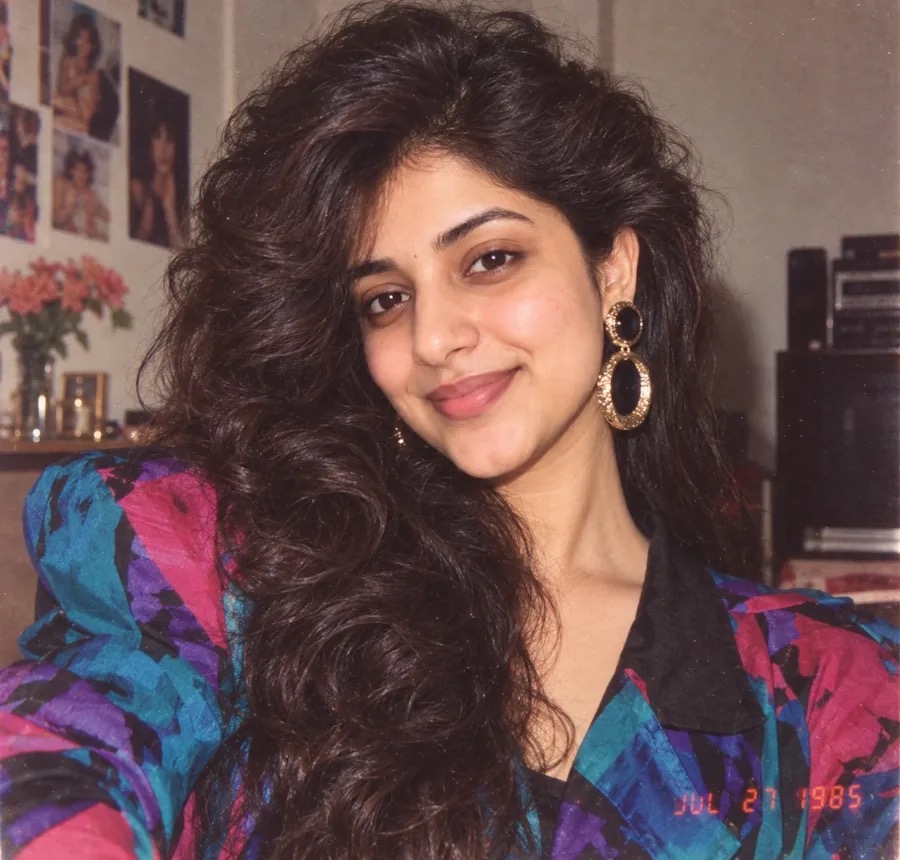
<p>A good 1980s photo prompt doesn’t just say “make it look retro.” It tells the image model which camera took the picture, how the light hit the subject, and what was on the film. Leave those details out and you usually get a modern, over-sharp image with a beige filter on top.</p>

<p>This guide breaks down what makes an AI image read as a genuine 1980s photograph, gives you a prompt you can paste straight into ChatGPT or Gemini to turn your own selfie into a 1985 photo, and points to a free gallery of retro AI prompts you can copy and adapt.</p>

<h2 id="why-most-retro-ai-prompts-miss-the-1980s-look">Why most “retro” AI prompts miss the 1980s look</h2>

<p>Most prompts fail because they describe a style instead of a capture. “80s style portrait” leaves the model to guess, and it often guesses wrong: clean skin, perfect focus, a phone-camera dynamic range.</p>

<p>Real photos from the decade came from 35mm compacts, disposable cameras, Polaroid instant film and camcorders. Each one left marks that are easy to name in a prompt:</p>

<ul>
  <li><strong>Direct on-camera flash</strong>: hard shadows behind the subject, bright faces, dark backgrounds.</li>
  <li><strong>Film color</strong>: warm skin tones, slightly faded shadows, a small shift in the highlights.</li>
  <li><strong>Imperfection</strong>: grain, soft edges, crooked framing, the odd blink or motion blur.</li>
</ul>

<p>Once those words are in the prompt, the outfit and setting only have to support the look, not carry it alone.</p>

<h2 id="the-building-blocks-of-a-1980s-photo-prompt">The building blocks of a 1980s photo prompt</h2>

<p>A reliable vintage photo prompt usually has four layers. Write them in roughly this order so the model sees the camera and film before the subject.</p>

<ol>
  <li><strong>Capture method.</strong> “35mm film snapshot”, “disposable camera photo”, “Polaroid instant print” or “camcorder still frame”.</li>
  <li><strong>Film and light.</strong> Name a film stock such as Kodak Gold or Fujicolor for color, then the light: direct flash, mall fluorescent tubes, or pink and cyan neon.</li>
  <li><strong>Period details.</strong> Teased or permed hair, shoulder pads, denim jackets, arcade cabinets, wood-panelled walls, boxy cars. These place the scene without you having to write the year.</li>
  <li><strong>Defects.</strong> Visible film grain, slight motion blur, soft focus at the edges, a red-orange date stamp in the corner.</li>
</ol>

<p>Just as important is what to leave out. Words like “8K”, “ultra sharp” or “HDR” push the result back toward a modern camera, so drop them from any retro AI image prompt.</p>

<h2 id="how-to-turn-your-own-photo-into-a-1985-photo-in-chatgpt-or-gemini">How to turn your own photo into a 1985 photo in ChatGPT or Gemini</h2>

<p>The viral version of this trend starts from your own picture rather than plain text. It works in any model that can edit an uploaded image, including ChatGPT and Gemini.</p>

<ol>
  <li>Pick a clear, front-facing photo with your face well lit.</li>
  <li>Upload it to ChatGPT or Gemini.</li>
  <li>Paste a prompt that locks your identity and changes everything else.</li>
</ol>

<p>Here is the prompt used on <a href="https://vintagephotoprompt.com/">Vintage Photo Prompt</a> for its 1985 before-and-after example:</p>

<div class="language-text highlighter-rouge"><div class="highlight"><pre class="highlight"><code>Using my uploaded photo, show me what I would have looked like around 1985. Preserve my identity, facial features, skin tone, age, and recognizable appearance. Reimagine my hair, clothing, accessories, and surroundings with bold, unmistakably mid-1980s styling—expressive silhouettes, statement accessories, layered details, distinctive colors, and textures. Make it feel like a genuine 1985 photograph with analog grain, faded color, direct flash, and subtle softness. Add a period-accurate 1980s red-orange date stamp in the lower corner. No modern objects or text.
</code></pre></div></div>

<p>Notice how the prompt splits into two jobs. The first sentences protect the face; the rest describes styling, film and flash. If your result drifts away from your real face, repeat the identity line at the end. If it looks too clean, add “visible film grain” or “slight motion blur”.</p>

<h2 id="copy-and-adapt-prompts-from-a-free-1980s-prompt-gallery">Copy and adapt prompts from a free 1980s prompt gallery</h2>

<p>Writing every prompt from scratch is slow, and it is hard to judge a prompt without seeing what it produced. <a href="https://vintagephotoprompt.com/">Vintage Photo Prompt</a> is a free gallery that pairs AI-generated 1980s images with the exact prompt behind each one, so you can see the output before you copy anything.</p>

<p>The gallery is grouped by style, which makes it quicker to find a starting point:</p>

<ul>
  <li><strong>Portrait and studio</strong>: mall laser backdrops, soft-box glamour shots, yearbook and passport photos.</li>
  <li><strong>Polaroid and film</strong>: date-stamped family albums, house-party flash, camcorder freeze frames.</li>
  <li><strong>Neon and city</strong>: arcades, Hong Kong street style, pastel beachfront sunsets.</li>
  <li><strong>Cinematic and illustration</strong>: film-still moods and 3D or illustrated takes on the decade.</li>
</ul>

<p>There is also a dedicated page of <a href="https://vintagephotoprompt.com/chatgpt-1980s-photo-prompts/">ChatGPT 1980s photo prompts</a> written for editing your own photo, sorted into groups such as men, women, couples and families, and Bollywood.</p>

<p>The workflow that tends to work best: find the image closest to the mood you want, copy its prompt, then change only the subject, outfit or location. Leave the camera, film and lighting words alone, because they are what make the picture read as a 1980s photo.</p>

<h2 id="getting-better-results-from-vintage-photo-prompts">Getting better results from vintage photo prompts</h2>

<p>Image models are random, so treat each prompt as a starting point rather than a one-shot answer.</p>

<ul>
  <li><strong>Generate three or four versions</strong> and keep the one with the most convincing grain and color.</li>
  <li><strong>Change one thing at a time.</strong> If you swap the outfit and the lighting together, you won’t know which change helped.</li>
  <li><strong>Expect model differences.</strong> The same text gives slightly different grain and color in ChatGPT, Gemini, Midjourney, Flux or Stable Diffusion.</li>
  <li><strong>Respect image credits.</strong> Prompts are free to copy, but example images belong to the people who made them; link to the original post if you republish one.</li>
</ul>

<h2 id="faq">FAQ</h2>

<h3 id="which-ai-tools-work-with-a-1980s-photo-prompt">Which AI tools work with a 1980s photo prompt?</h3>

<p>Any text-to-image model can use the prompt text, including ChatGPT, Gemini, Midjourney, Flux and Stable Diffusion. To transform your own picture, you need a model that supports image editing, such as ChatGPT or Gemini.</p>

<h3 id="how-do-i-keep-my-face-the-same-when-making-a-1985-photo">How do I keep my face the same when making a 1985 photo?</h3>

<p>Put an explicit identity instruction at the start of the prompt, for example “preserve my identity, facial features, skin tone and age”, and use a clear, well-lit source photo. If the face still drifts, repeat that instruction at the end of the prompt.</p>

<h3 id="why-does-my-retro-ai-image-still-look-modern">Why does my retro AI image still look modern?</h3>

<p>Usually the prompt is missing a capture method and film details, or it contains words like “8K” or “ultra sharp”. Name the camera and film, ask for direct flash and grain, and remove high-resolution terms.</p>

<h2 id="conclusion">Conclusion</h2>

<p>A convincing 1980s photo prompt describes how the picture was taken, not just what was in it: camera, film, flash, period details and a few honest flaws. Start from the 1985 prompt above for your own selfie, or browse <a href="https://vintagephotoprompt.com/">vintagephotoprompt.com</a> to copy a tested prompt and change only the parts that matter to you.</p>]]></content><author><name></name></author><category term="ai" /><category term="chatgpt" /><category term="prompts" /><category term="photography" /><summary type="html"><![CDATA[How to write a 1980s photo prompt: camera, film, flash and period details, plus a free 1985 selfie prompt for ChatGPT and Gemini.]]></summary><media:thumbnail xmlns:media="http://search.yahoo.com/mrss/" url="https://wxixuan118-ship-it.github.io/assets/images/1980s-photo-prompt-1985-after.jpg" /><media:content medium="image" url="https://wxixuan118-ship-it.github.io/assets/images/1980s-photo-prompt-1985-after.jpg" xmlns:media="http://search.yahoo.com/mrss/" /></entry></feed>